Bienvenido al látex dongyang songpu (jinzhou) co., limitado!



Condones de poliuretano biodegradables con propiedades antibacterianas
2024-06-03
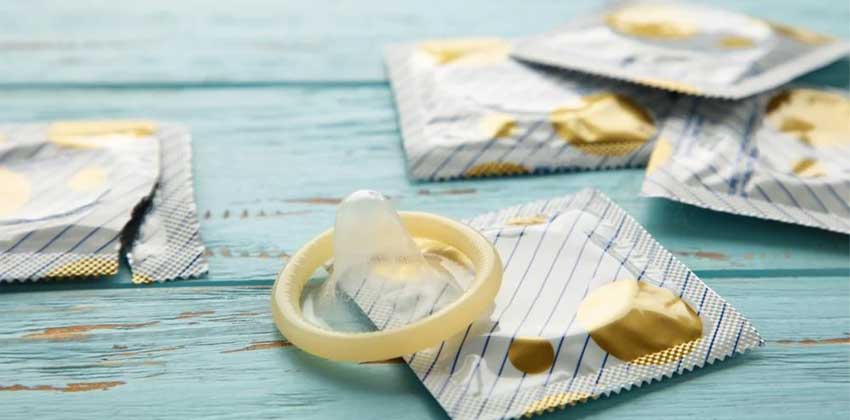 Los condones de látex siguen siendo los principales tipos de condones en el mercado., ocupan más de 95% de la cuota de mercado total, otro tipo es el condón de poliuretano, ahora hay un nuevo tipo de condón. Un condón de poliuretano biodegradable con función antibacteriana, caracterizado porque comprende los siguientes componentes en partes en peso:
(A) Poliuretano biodegradable: 65%-90%;
(B) Antibacterial particles modified by connecting amphiphilic polymers having both polyhydroxyl structure and alkane structure: 10%-35%; wherein the mass percentage content of amphiphilic polymers having both polyhydroxyl structure and alkane structure is 35%-75%, and the mass percentage content of antibacterial particles is 25%-65%;
The biodegradable polyurethane is a polyurethane polymer with an average molecular weight of 300000-2000000.
2. A biodegradable polyurethane condom with antibacterial function according to claim 1, characterized in that the biodegradable polyurethane is a natural biodegradable polymer modified polyurethane or a synthetic biodegradable polyurethane polymer.
3. A biodegradable polyurethane condom with antibacterial function according to claim 2, characterized in that the natural biodegradable polymer modified polyurethane is specifically one of cellulose modified polyurethane, chitosan modified polyurethane, starch modified polyurethane, lignin modified polyurethane, and tannin modified polyurethane.
4. A biodegradable polyurethane condom with antibacterial function according to claim 2, characterized in that the synthetic biodegradable polyurethane polymer is specifically one of polylactic acid, polycaprolactone, polyglycolic acid, polybutylene succinic acid, polylactic acid-glycolic acid copolymer, polylactic acid-polyethylene glycol copolymer, polyethylene carbonate diol, polyoxyethylene, polytetramethylene ether, polyoxypropylene, polyethylene carbonate diol, lysine diisocyanate, 1,6-hexamethylene diisocyanate, isophorone diisocyanate, dicyclohexylmethane diisocyanate, and 1,4-butane diisocyanate.
5. A biodegradable polyurethane condom with antibacterial function according to claim 1, characterized in that the antibacterial particles refer to inorganic antibacterial particles of nanometer or micrometer level or organic quaternary ammonium salt antibacterial particles.
6. A biodegradable polyurethane condom with antibacterial function according to claim 5, characterized in that the inorganic antibacterial particles are: one or a mixture of gold, silver, silver oxide, titanium dioxide, zinc oxide.
7. A biodegradable polyurethane condom with antibacterial function according to claim 5, characterized in that the organic quaternary ammonium salt antibacterial particles are: one or a mixture of hexadecyltrimethylammonium bromide, hexadecylpyridinium chloride, tetradecyldimethylbenzylamine chloride, pyridinium chloride diquaternary ammonium salt, diammonium phosphate, polyethyleneimine, poly (4-vinyl) pyridine, methacryloyloxyethyl-benzyl-dimethylammonium chloride.
8. A biodegradable polyurethane condom with antibacterial function according to claim 1, characterized in that the amphiphilic polymer having both polyhydroxy structure and alkane structure is a grafted or block copolymer having both hydrophilic and hydrophobic segments obtained by chemical synthesis reaction of alcohol, sugar, acid organic molecules containing hydrophilic polyhydroxy structure and organic molecules containing hydrophobic alkane structure.
9. A method for preparing a biodegradable polyurethane condom with antibacterial function, characterized by comprising:
a. dissolving the biodegradable polyurethane and the amphiphilic polymer with a polyhydroxy structure and an alkane structure in an organic solvent respectively, dispersing the antibacterial particles in distilled water, and sealing the solution for ultrasonic or stirring dispersion;
b. dripping the antibacterial particle aqueous solution into the amphiphilic polymer solution at a rate of 1-3 drops/second, maintaining the stirring speed at 100-300 rpm during the dripping process, and sealing the solution again after the dripping is completed, and continuing to stir for not less than 0.5 hours to obtain a mixed solution;
c. stirring the mixed solution of the amphiphilic polymer and antibacterial particles obtained in step b until there is no obvious change in dispersibility and color, and then Add to the polyurethane solution at a rate of 1-3 drops/second, keep the stirring speed at 200-400 rpm during the dropping process, seal the solution again after the dropping is completed, heat to 40℃-80℃ and continue stirring for no less than 0.5 hours to obtain the target biodegradable polyurethane with antibacterial function;
d. After the mixed system of biodegradable polyurethane with antibacterial function is stirred evenly, reduce the stirring speed to 100-200 rpm, keep the temperature at a constant temperature between 10℃-40℃, and obtain the prepared emulsion as the main material for the production of condoms;
e. Add additives with a mass percentage of no more than 0.2% to the prepared emulsion, and prepare biodegradable condoms according to conventional condom production processes.
10. A method for preparing a biodegradable polyurethane condom with antibacterial function according to claim 9, characterized in that the organic solvent is specifically one of acetone, dichloromethane, chloroform, tetrahydrofuran, petroleum ether, ethyl acetate, dimethylformamide, dimethyl sulfoxide, pyridine, and toluene.
Tal vez te guste también
 Productos de látex Guangzhou Double One
 Suretex Limited Tailandia fabricante de condones
Copiar©2017 | dongyang songpu látex (jinzhou) co., limitado | mapa del sitio